
Sustainability
From ecological problem to sustainable ingredient
— turning an invasive species into a resource.
The Problem: An Invasive Species Out of Control
European shore crab (Carcinus maenas) is classified by the IUCN as one of the 100 worst invasive species globally. In Danish coastal waters, shore crab populations have grown to levels that cause measurable harm to marine ecosystems. Decameal harvests these crabs and transforms them into high-value sustainable ingredients — turning an ecological burden into a resource.
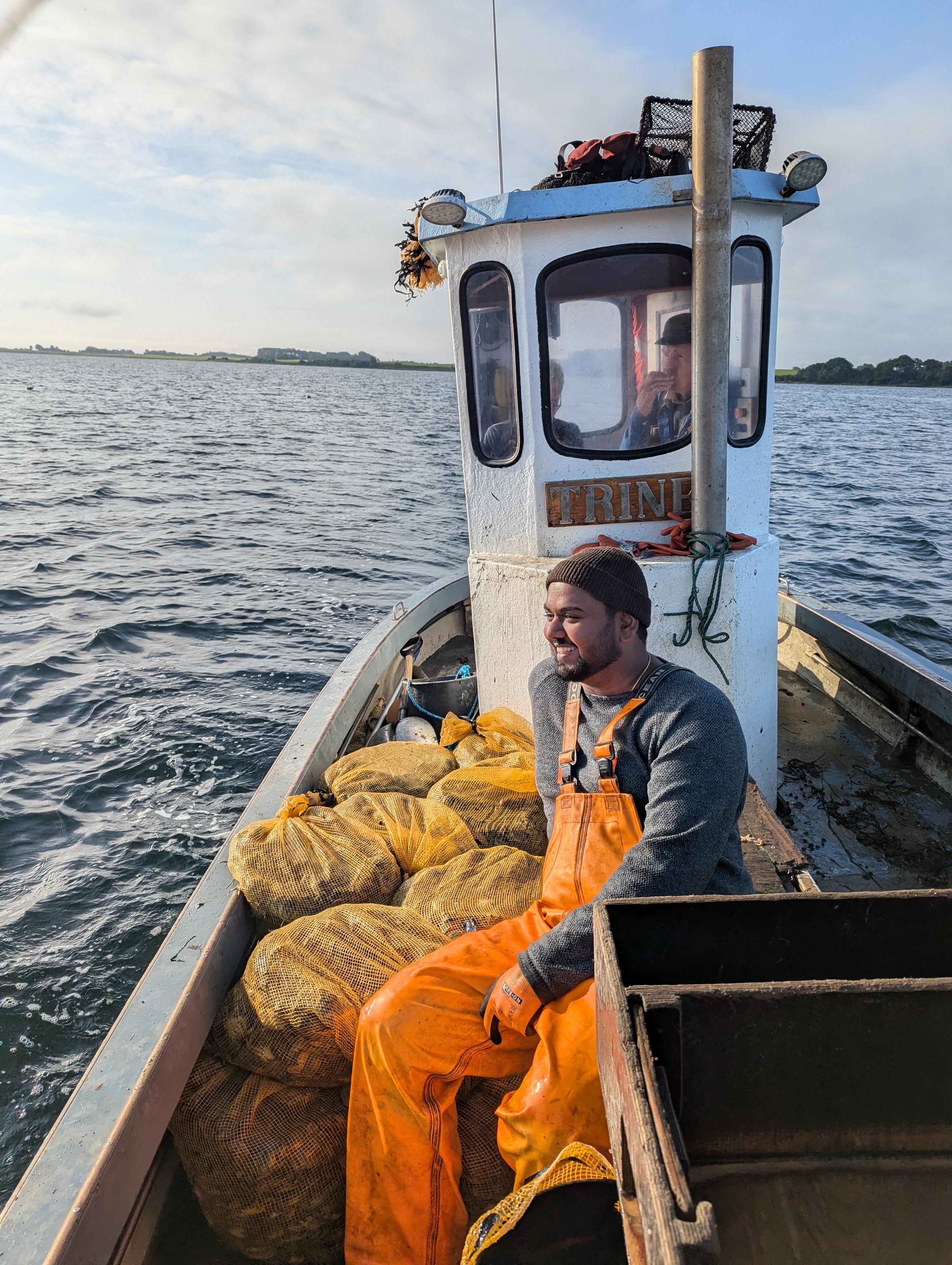
Sustainable Raw Material Sourcing
- Crabs are harvested by Danish fishers along the coastline using passive fishing gear (fyke nets and pots)
- Passive gear has the lowest environmental impact of any fishing method — confirmed by DTU Aqua Report No. 392-2021
- No catch quota exists or is anticipated for shore crabs due to the exceptionally large population
- Fishery operates under the EU Common Fisheries Policy (CFP)
- Danish fisheries additionally subject to national marine strategy objectives (EU Marine Strategy Framework Directive)
Fishing as Nature Restoration
Professor Peter Grønkjær of Aarhus University has characterised crab fishing as a form of nature restoration, comparable to eelgrass replanting or stone reef construction.
Biodiversity benefits of crab removal:
- Reduced predation on juvenile fish (especially flatfish), blue mussels, cockles, and soft shell mussels
- Protection of eelgrass beds by reducing crab burrowing that destabilises root networks
- Overall improvement in marine ecosystem balance
- Support for recovery of commercially and ecologically important species
Nutrient Removal
Shore crabs contain approximately 1.6% nitrogen and 1.4% phosphorus by weight. Large-scale harvest physically removes excess nutrients from the marine environment. These nutrients are primary drivers of the eutrophication afflicting Danish coastal waters.
Carbon Footprint
Preliminary assessment indicates a favourable carbon footprint compared to conventional feed alternatives such as fish meal and soy bean meal. The primary contributor is the fishing stage, with secondary contributions from processing and packaging.
Decameal intends to commission a comprehensive, externally assured Life Cycle Assessment as production scales.
UN Sustainable Development Goals
Responsible Consumption & Production
Valorisation of an invasive species into useful feed ingredients, turning an ecological burden into a resource.
Climate Action
Preliminary assessment indicates favourable carbon footprint compared to fish meal and soy.
Life Below Water
Direct contribution to marine ecosystem restoration through removal of overabundant invasive species and extraction of excess nutrients.
Life on Land
Reducing dependence on soy-based feed, thereby indirectly reducing pressure on land-use change and deforestation.
Circular Economy
Our value chain creates a circular flow where every fraction of the crab is valorised:
- Fishers harvest invasive crabs from Danish coastal waters (passive gear, low impact)
- Marine ecosystem benefits from reduced crab population (biodiversity, nutrient removal)
- Protein processing produces Crab Meal and Crab Concentrate for animal feed
- Shell processing extracts chitin, chitosan, and astaxanthin for diverse applications
- Zero waste ambition: Every fraction of the crab is valorised
- Replacing conventional inputs: Marine protein replaces soy (less deforestation), natural astaxanthin replaces synthetic (petrochemical-free), crab shell calcium replaces mined limestone